Product operations and portfolio prioritization
Building a Planning Platform to Weigh Priorities Against Real Dev Capacity
An internal roadmap and capacity-planning tool for three brands.
- Role
- Product Lead & Builder
- Organization
- Alatus Solutions (internal)
- Timeline
- 2026
- Status
- Internal tool · In use
Visuals
Shared with approval. Customer and internal business data redacted.
Context
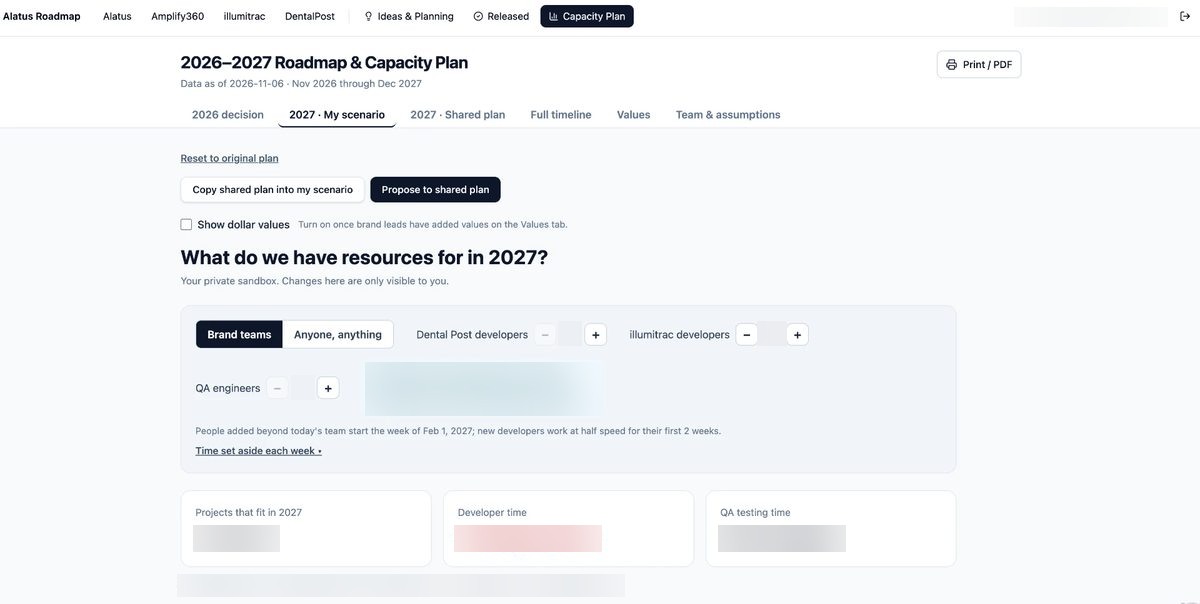
- I built Strategic Horizons, an internal planning platform that helps us roadmap across Alatus, Amplify360, illumitrac and DentalPost, weigh priorities against each other, and see what's actually possible with our development capacity.
- With one PM across three brands and a shared, limited engineering team, every roadmap conversation was really a capacity conversation.
- It was hard to see trade-offs between brands in one place.
What I did
- Owned and built: the concept, data model and build.
- I use it to facilitate prioritization and staffing conversations with leadership and brand leads.
- Per-brand roadmaps, plus Ideas & Planning and Released views.
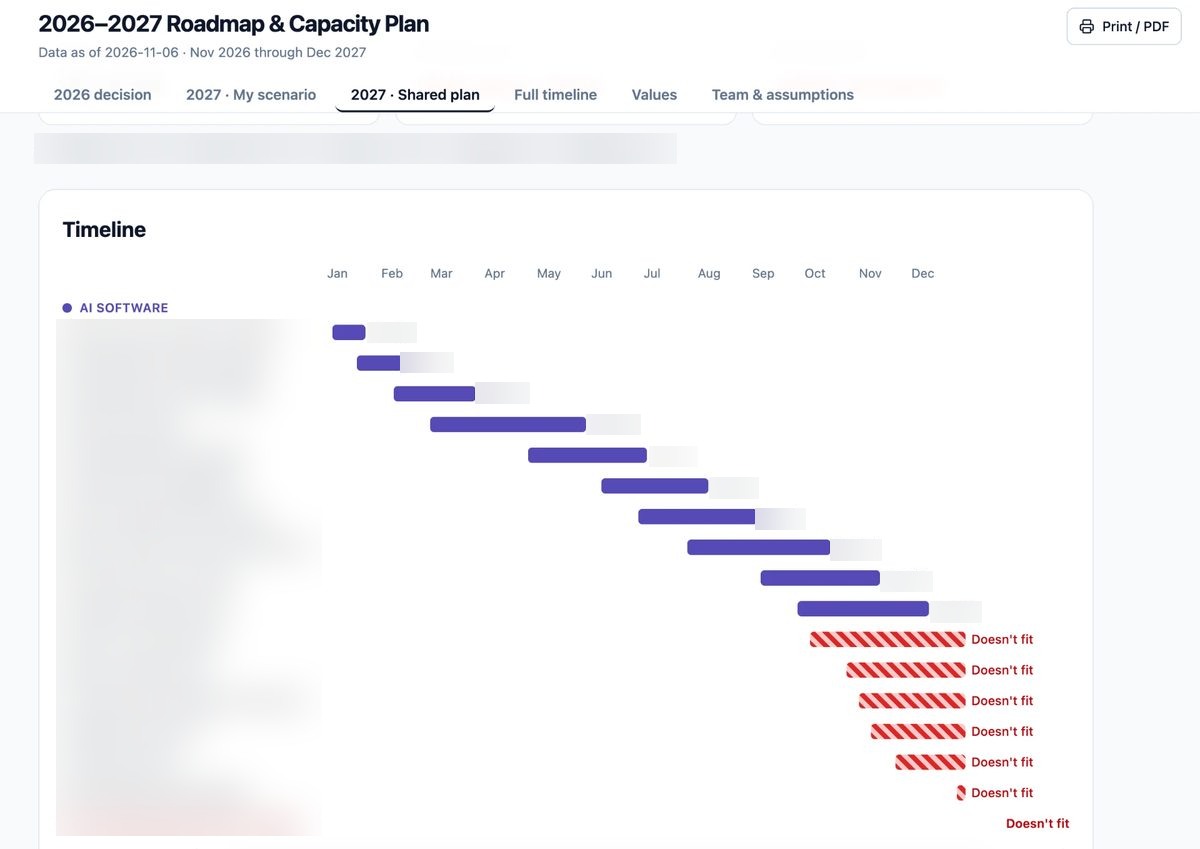
- A Capacity Plan with a 2026 decision view, a shared 2027 plan, a full timeline, values, and team & assumptions.
- A private "My scenario" sandbox: add developers or QA engineers, instantly see how many projects fit, then propose the scenario to the shared plan.
- A timeline that shows which projects fit and which don't.
- Explicit assumptions, such as new hires' start dates and ramp-up time.
- Optional dollar values once brand leads add them, and Print/PDF for leadership.
What changed
Status: In use internally
Too early to measure.
More detail
Tradeoffs
- Making assumptions explicit invites debate. That's the point.
- A planning model is only as good as its estimates.
Lessons
Showing what doesn't fit changes the conversation faster than arguing about what should.
Built at Alatus Solutions. Internal architecture, customer data, and confidential business details are intentionally omitted.